- Start Your Free Consultation
- (866) 557-4343
A DWI blood test can feel like the strongest evidence against you, but a blood result is not automatically the end of your case. In Texas, blood test evidence depends on how the sample was collected, whether police followed the law, how the blood was stored, and whether the lab handled the testing correctly.
At Texas Criminal Defense Group, our Texas DWI blood test lawyers review every part of the State’s evidence, from the traffic stop and arrest to the warrant, blood draw, chain of custody, lab records, and final toxicology report. If there are problems with the way your blood sample was taken, tested, or interpreted, those issues may be used to challenge the case against you.


Board Certified
Only 1% of Attorney's in TX are Board Certified in Criminal Law

Phones Answered 24/7

5-Star
Google Ratings
over 500
11,500+ Cases Handled

We Fight for Dismissals and Never Back Down from Trial
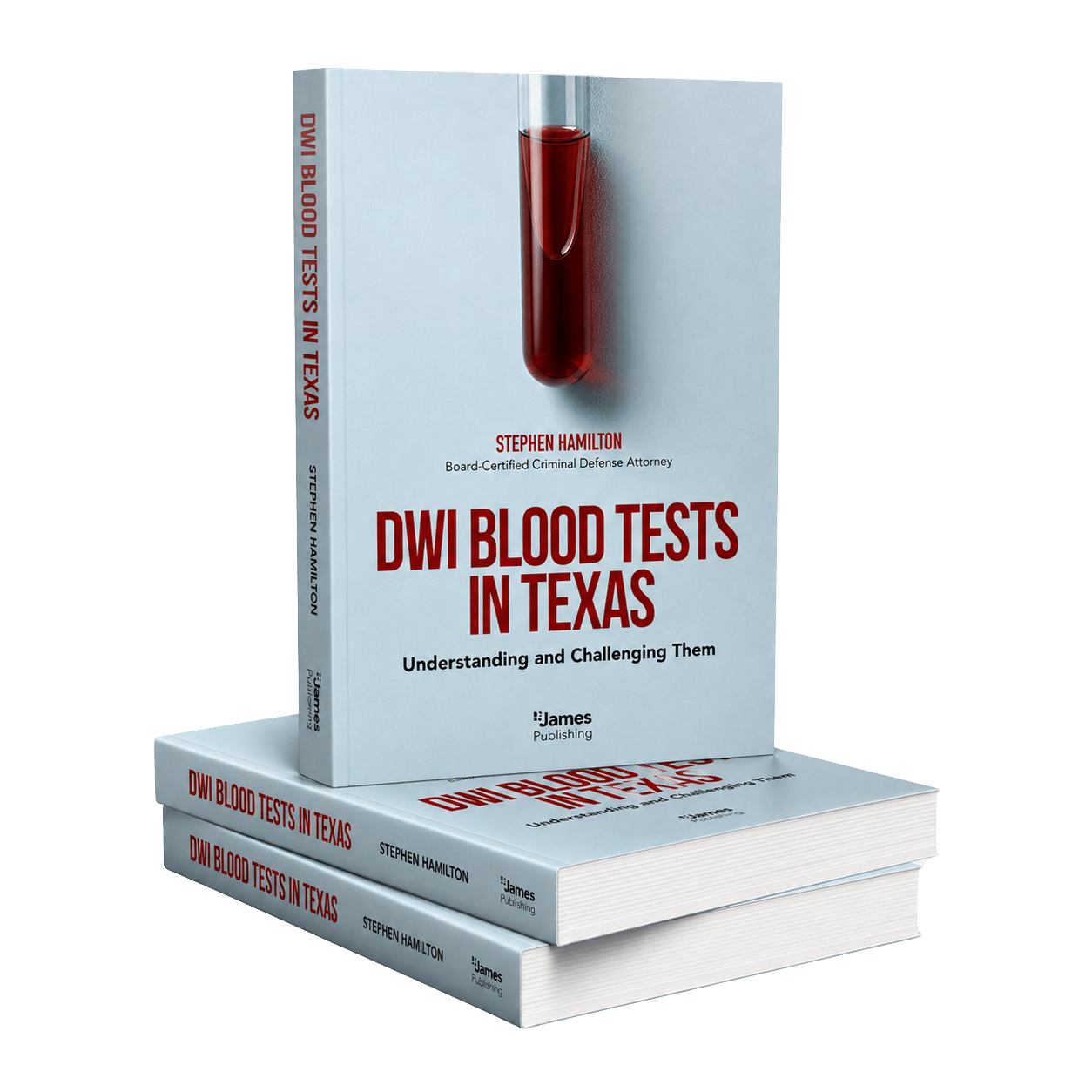
A step-by-step guide to understanding how DWI blood test evidence works — and where problems can arise.
If you are facing a DWI charge in Texas involving a blood test, it may feel like the case is already decided. A BAC result can seem definitive, but that number is only as reliable as the process used to create it. From the moment your blood is drawn to the way it is stored, tested, and interpreted, every step matters.
On this page, you’ll find detailed FAQs, explainer videos, and clear breakdowns of how DWI blood testing works and where problems can arise. We explain the legal and scientific issues that can affect the accuracy and admissibility of blood test evidence, so you can better understand your case and your options.
Every case is different, and blood test evidence must be evaluated carefully and strategically. Our team takes a detailed, science-driven approach to examine the entire process behind the result, not just the number itself. Contact us for a confidential case evaluation.
A DWI blood test can look convincing on paper, but the result is only one part of the case. The real questions are how the sample was collected, whether the law was followed, how the blood was handled, and whether the lab’s process can stand up to close review.
At Texas Criminal Defense Group, we do not treat a blood test as the end of the case. We look at the full timeline, from the traffic stop and arrest to the warrant, blood draw, chain of custody, lab testing, and final report. That broader review can reveal legal, procedural, or scientific issues that may affect how strong the State’s evidence really is.
In blood test cases, small details matter. A delay in testing, a documentation gap, a questionable warrant, improper storage, or unclear lab records can change the direction of the defense.
Blood test evidence can seem scientific and final, but the results are only as reliable as the process used to collect, store, test, and interpret the sample. At Texas Criminal Defense Group, we carefully review the forensic details behind DWI blood test evidence to identify possible weaknesses in the State’s case.
Our defense team evaluates issues such as blood draw procedures, chain of custody, lab testing methods, contamination risks, instrument calibration, quality control records, and whether the reported blood alcohol or drug concentration can be trusted. When appropriate, we also consult with qualified forensic toxicology professionals who can help analyze the science behind the blood test results.
This level of review allows us to challenge blood evidence when the facts support it and helps ensure that prosecutors are not relying on flawed, incomplete, or misleading forensic testing.
By combining legal strategy with in-house scientific analysis, our team evaluates blood test evidence at a level most firms simply cannot match.
To help you understand how blood test evidence works, and what it may mean for your case, we’ve answered the most common questions our attorneys receive from clients across Texas.
Because a blood test is a process and not just a number, these answers focus on where problems can occur and how those issues may be challenged in court. Click any question for its answer.
General Understanding of DWI Blood Tests
A blood test is one of the primary forms of evidence prosecutors use in a Texas DWI case to try to prove intoxication. The sample is analyzed to determine your blood alcohol concentration (BAC), and if it shows 0.08 percent or higher, the state may argue you were legally intoxicated at the time of driving.
But the number on the lab report does not stand alone. To use that result in court, the state must show that every step was done correctly, from the traffic stop and arrest to how the blood was drawn, stored, transported, and tested. Each of those steps can be challenged. If something went wrong along the way, the reliability of the result may be questioned or even excluded.
Not necessarily. Blood tests are often described as the “gold standard,” but that assumes everything was done properly, and that is not always the case. While blood testing can be more detailed than breath testing, it also introduces more opportunities for error. Problems can occur during the blood draw, in how the sample is stored, or during lab analysis, and issues like contamination, improper refrigeration, or equipment calibration can all affect the result.
In some cases, a properly conducted breath test may actually be more reliable than a poorly handled blood test. Accuracy depends on the entire process, not just the type of test used.
Yes. In Texas, a DWI charge is not based solely on your BAC number. Even if your BAC is below 0.08, you can still be charged if the officer believes you did not have the “normal use” of your mental or physical faculties due to alcohol or drugs. This is known as impairment-based DWI.
In that situation, the prosecution can rely on other evidence, such as your driving behavior, your performance on field sobriety tests, the officer’s observations, and statements you made during the stop. A BAC under 0.08 can be helpful to your defense, but it does not automatically prevent a DWI charge.
Police may choose a blood test for several reasons, depending on the situation. Common scenarios include cases in which you refused a breath test, cases involving an accident (especially one with injuries), cases in which the officer suspects drug use (which breath tests cannot measure), and cases in which the officer simply believes a blood test will produce stronger evidence.
Blood tests are often seen as more persuasive in court because they appear more scientific. However, they are also more complex and subject to more potential issues, especially when it comes to how the sample is handled and tested.
No. A blood test is powerful evidence, but it is not the final word. A BAC result is not just a number; it is the product of a multi-step process that involves police procedures, legal requirements such as warrants or consent, medical collection methods, evidence handling and storage, and laboratory testing and interpretation.
If any part of that process is flawed, the result can be challenged. In some cases, blood test evidence is reduced in weight, discredited, or even thrown out entirely. Many people assume a blood test means the case is over. In reality, it often marks the beginning of the defense strategy, not the end.
Legal Authority & Your Rights
Sometimes, but not automatically. In Texas, a blood draw is considered a search under the Fourth Amendment, which means police must follow strict legal rules. In most cases, they need either your voluntary consent or a valid search warrant.
There are limited exceptions, such as certain serious accidents or situations involving unconscious drivers, but even then, the state must justify why a warrant was not obtained. If police take your blood without meeting one of these legal requirements, your attorney may be able to challenge the evidence and potentially have it excluded.
In most cases, yes. If you do not consent, officers typically must obtain a search warrant signed by a judge before taking your blood. Today, this often happens quickly through electronic warrants, even late at night.
However, having a warrant does not automatically make the blood draw valid. The warrant must be based on probable cause, it must contain accurate and complete information, and it must be properly executed. If any of those elements are missing, the warrant, and the blood test that follows from it, may be challenged in court.
Implied consent means that by driving on Texas roads, you are considered to have already agreed to submit to a breath or blood test if lawfully arrested for DWI. But this concept is often misunderstood. Implied consent does not mean you are forced to comply. You can still refuse a test.
What it means is that refusal triggers automatic penalties such as license suspension, that your refusal can be used against you in court, and that police may seek a warrant to override your refusal. In other words, you have the right to refuse, but not without consequences.
Refusing a blood test sets off a separate set of consequences, even before your criminal case is decided. For a first refusal, you may face a driver’s license suspension of up to 180 days, and your refusal can be used as evidence in court.
Refusal also does not always prevent the test. In many cases, officers will simply obtain a warrant and proceed with a blood draw anyway. That said, a refusal can sometimes limit the evidence available to the state or create legal issues your attorney can use in your defense. The impact depends heavily on the facts of your case.
Yes, if police obtain a valid warrant or a legal exception applies. When you refuse, officers can request a warrant from a judge. Once a warrant is issued, they can require a blood draw and may use reasonable force if necessary.
However, the legality of that forced draw still depends on whether the warrant was valid and properly executed. If it was not, the results may be challenged or suppressed.
Yes. A defective warrant can be one of the strongest defenses in a DWI blood test case. A warrant may be challenged if it was based on false or misleading information, if it lacked sufficient probable cause, if important facts were omitted, or if it was improperly executed.
If a court determines the warrant was invalid, the blood test results may be suppressed, meaning the jury will never see them. In many cases, that significantly weakens the prosecution’s case.
Your consent must be voluntary to be valid. If you agreed because you felt intimidated, misled, or believed you had no choice, your attorney may be able to challenge that consent. Courts look at factors such as what the officer said, whether you were told you could refuse, your physical and mental condition, and the overall tone of the interaction.
Statements like “you have to do this” or “it will be worse if you don’t” can create pressure that undermines true consent. If your consent is found to be involuntary, the blood test results may be excluded from evidence. In many of these cases, bodycam footage becomes critical in proving what actually happened.
Blood Draw Process
Texas law strictly limits who can perform a blood draw in a DWI case. Typically, the blood must be drawn by a qualified medical professional, such as a physician, a registered nurse, a licensed vocational nurse, an emergency medical technician, or a properly certified phlebotomist.
If someone without proper credentials performs the draw, that can create a serious legal issue. Courts have excluded blood test results when the person drawing the blood was not legally authorized. This is one of the first things a defense attorney will investigate.
Most DWI blood draws happen in a medical setting, such as a hospital, a clinic, or a designated blood draw facility. In some cases, especially when a warrant has been obtained, officers may take you to a facility that regularly performs forensic blood draws for law enforcement.
The location matters because the environment can affect how the blood is collected, labeled, and stored. A rushed or poorly controlled setting increases the risk of mistakes, and those mistakes can later be challenged in court.
There are both legal and scientific standards that must be followed to ensure the blood sample is reliable. Key requirements typically include using a non-alcohol antiseptic rather than an alcohol swab, drawing blood into proper collection tubes with preservatives and anticoagulants, properly labeling and sealing the sample, documenting who collected the blood along with when and where it was collected, and ensuring the sample is stored and transported correctly.
Even small deviations, such as using the wrong type of swab or failing to mix the preservatives, can affect the integrity of the sample. These are not minor technicalities. If procedures are not followed, the accuracy of the BAC result can be questioned and, in some cases, excluded entirely.
Chain of custody is the paper trail that tracks your blood sample from start to finish. It documents who drew the blood, when and where it was collected, who handled it during transport, how it was stored, who received it at the lab, and who tested it.
Every transfer must be recorded and accounted for. The purpose is simple: to prove that the sample tested in the lab is actually yours and that it was not altered, contaminated, or mixed up along the way.
If the chain of custody is incomplete or unclear, it creates a serious problem for the prosecution. Common issues include missing signatures or timestamps, unexplained gaps in handling, mismatched labels or documentation, and no record of proper storage conditions.
When this happens, your attorney can argue that the sample may have been tampered with, that it may not actually belong to you, or that the integrity of the evidence cannot be trusted. In some cases, a broken chain of custody can lead to the blood test being excluded from evidence. Even when it is not excluded, it can significantly weaken the prosecution’s case by creating reasonable doubt about the reliability of the result.
Lab Testing & Science
After your blood is drawn, it is sent to a crime lab where it is analyzed, usually using a method called gas chromatography. In simplified terms, a portion of your blood is heated, the alcohol turns into vapor, the vapor is separated and measured by a machine, and the machine produces a result that is reported as your BAC.
While this sounds precise, the result depends on many factors, including how the sample was stored, whether the equipment was functioning properly, and how the analyst interpreted the data. It is not just a machine producing a number. It is a multi-step process involving people, procedures, and judgment at every stage.
Yes. Like any scientific instrument, lab equipment can produce inaccurate results if something goes wrong. Potential issues include improper calibration, poor maintenance, contamination between samples, and software or data interpretation errors.
Even highly sophisticated machines rely on human setup, oversight, and interpretation. If the equipment was not properly maintained or operated, the result may not be reliable. Technology reduces error, but it does not eliminate it.
There is no single percentage, but errors are not rare enough to ignore. Texas crime labs handle a high volume of DWI cases, and with that volume comes heavy workloads, backlogs and delays, and time pressure on analysts. Under those conditions, mistakes can and do occur, ranging from minor documentation issues to more serious problems like mislabeling samples or failing to follow proper procedures.
The key point is not how often errors happen in general. It is whether an error occurred in your specific case. Every case must be independently reviewed rather than assumed to be correct.
Calibration and maintenance records are the proof that the testing machine was working properly at the time your sample was analyzed. Calibration records show that the machine was tested against known standards to ensure accuracy, while maintenance records show that the machine was serviced, repaired, and functioning correctly.
If those records are missing, incomplete, or outdated, the state may have difficulty proving that the machine was producing accurate results. In a DWI case, the prosecution must prove reliability, not just present a number. If the machine’s reliability cannot be verified, that creates doubt about the result itself.
A chromatogram is the graph produced by the testing machine that shows the chemical analysis of your blood sample. Each “peak” on the graph represents a substance detected in your blood. One of those peaks is supposed to represent alcohol (ethanol), and its size is used to calculate your BAC.
Here is the key point: the machine does not “know” what it is measuring. A human analyst interprets the data. That means a chromatogram can be challenged based on misinterpretation of peaks, overlapping chemicals (known as co-elution), contamination, or poor-quality data.
A defense attorney, often working with a forensic toxicologist, can review the chromatogram to determine whether the result was correctly identified and calculated. In many cases, the real story is not in the final BAC number. It is in the underlying data that produced it.
Common Problems with Blood Tests
“Rising BAC” refers to the fact that alcohol does not instantly enter your bloodstream. It takes time to absorb. After you drink, your body goes through an absorption phase, in which your BAC is increasing, and then an elimination phase, in which it decreases. If you were stopped shortly after drinking, your BAC may have been lower while you were driving than it was later when your blood was tested.
This matters because the law focuses on your BAC at the time of driving, not at the time of testing. If your BAC was still rising, a later blood test may not accurately reflect your condition behind the wheel.
Yes, and this is more common than most people realize. There is often a delay between the traffic stop, the arrest, and the blood draw. That delay can be thirty minutes, an hour, or longer. During that time, your body may still be absorbing alcohol, which can cause your BAC to increase after you stopped driving. This is one of the key scientific issues in many DWI cases, especially when the BAC result is close to the legal limit.
Yes, under certain conditions. Alcohol can form inside the vial through a process called fermentation, which happens when bacteria or yeast convert sugars in the blood into alcohol after the sample has been collected.
Fermentation is more likely if the sample was not properly preserved, if it was not refrigerated promptly, or if there was a long delay before testing. If this occurs, the BAC reported by the lab may be higher than your actual BAC at the time of driving.
Improper storage can significantly affect the accuracy of a blood test. Blood samples must be refrigerated promptly, stored at controlled temperatures, and protected from contamination. If a sample is left unrefrigerated, such as in a patrol car or evidence locker, bacterial growth can occur. That can lead to chemical changes in the sample, including the production of alcohol.
Even small storage issues can become critical, especially in close cases where the BAC is near 0.08.
Yes. Contamination is one of the most important, and often overlooked, issues in blood testing. It can occur during the blood draw, during transport, or inside the lab. Common sources include residue from other samples, improperly cleaned equipment, and external substances entering the sample. Even a small amount of contamination can artificially increase the reported BAC or interfere with how the sample is analyzed.
Preservatives play a critical role in maintaining the integrity of a blood sample. Blood collection tubes typically contain chemicals designed to prevent bacterial growth, stop fermentation, and keep the sample stable. If those preservatives are missing, expired, or improperly mixed, the sample may degrade or produce alcohol after the draw. That means the BAC reported by the lab may not reflect what was actually in your system while driving. In these situations, the reliability of the test result can be seriously challenged.
Challenging Blood Test Evidence
There is no single defense that applies to every case, but most DWI blood test defenses fall into two categories: legal defenses and scientific defenses.
Legal defenses may include an unlawful traffic stop, a lack of probable cause for arrest, an invalid or defective warrant, and coerced or invalid consent. Scientific defenses focus on the reliability of the test itself and may include rising BAC (meaning your level was lower while driving), improper storage or handling of the sample, contamination or fermentation, and lab errors or faulty testing procedures.
In many cases, the strongest defense combines both. The goal is not just to challenge the number but to challenge how that number was created.
Yes. A BAC over 0.08 does not automatically mean a conviction. The prosecution must prove that the test result is accurate, that it reflects your BAC at the time of driving, that it was obtained legally, and that all procedures were followed correctly.
If there are problems in any of those areas, your attorney may be able to suppress the blood test, undermine its reliability, or create reasonable doubt. Many DWI cases with over-the-limit blood tests are still reduced or dismissed. The number alone does not decide the outcome.
Not necessarily. Jurors often start by assuming scientific evidence is reliable. But that perception can change quickly when they learn how many steps are involved in producing the result, how much depends on human handling and interpretation, and where mistakes can occur.
When a defense attorney clearly explains weaknesses such as missing records, improper procedures, or questionable assumptions, jurors may begin to question whether the result is truly reliable. A blood test may sound definitive, but in court it is still just evidence, and evidence can be challenged.
A forensic toxicologist is an expert who understands the science behind blood testing and where it can go wrong. A toxicologist can review lab records, chromatograms, and raw data; identify errors in testing procedures or interpretation; evaluate whether BAC could have been rising at the time of testing; detect signs of contamination or fermentation; and explain complex science in plain language to a jury.
In many cases, a toxicologist helps translate technical issues into clear, persuasive testimony that shows the result may not be as reliable as it appears.
In many cases, yes. A blood test often makes the case feel overwhelming, but it also creates more areas to challenge. Unlike simpler cases, blood test cases involve legal issues such as warrants, consent, and procedure; medical issues such as how the blood was drawn; and scientific issues such as how it was tested and interpreted. That complexity can work in your favor if the case is carefully analyzed.
The real question is not whether there is a blood test. It is whether the state can prove that test is reliable beyond a reasonable doubt.
What you do in the first few days can directly affect your case. Act quickly on your license, because you have only fifteen days to request an ALR hearing to fight suspension. Document everything you remember, including the timeline of the evening, what you ate and drank, and what officers said to you. Preserve any evidence that supports your timeline, such as receipts, messages, or videos. Avoid discussing the case with anyone other than your attorney, and especially avoid posting about it on social media. And contact a DWI defense attorney immediately.
Early action matters. Evidence can disappear, deadlines can pass, and small details can become critical later. A blood test may feel like the most important part of your case, but what happens after the arrest often determines how that evidence is used, challenged, or defeated.
Click a chapter to read an excerpt from Stephen Hamilton’s guide to challenging Texas DWI blood test results.
1.1. Take a Breath: You’ve Been Arrested — Now What?
Getting arrested for DWI (Driving While Intoxicated) can feel like a nightmare. You may be scared, confused, angry, or ashamed. Maybe it’s your first time in trouble with the law. Maybe you’ve been through this before and know how quickly the situation can spin out of control. Either way, what you do next matters — and it matters a lot.
Let’s start with the most important truth: being arrested is not the same as being convicted.
Even if you submitted to a breath or blood test, even if you performed field sobriety tests, even if the officer told you that you “failed” — your case is far from over. Texas DWI cases can be challenged, evidence can be suppressed, and charges can be reduced or dismissed. But you need to act quickly and strategically.
1.2. Step-by-Step: What to Do Immediately After Your Arrest
Step 1: Write Down Everything You Remember As soon as possible — ideally within 24 hours — write down a detailed account of what happened before, during, and after your arrest. Include what you ate or drank, how the officer pulled you over, whether you took field sobriety tests, whether you took a breath or blood test (or refused), and who else was present. Even small details can become important later.
Step 2: Save and Protect Any Evidence Screenshots of texts, Uber/Lyft receipts, and timestamps on social media posts may all help verify your timeline or challenge the officer’s version of events. Keep your citation, any paperwork from jail, and any bond conditions you were given. Don’t throw anything away.
Step 3: Request an ALR Hearing to Save Your License You have only 15 days from the date of your arrest to request a hearing to challenge your license suspension. Miss it, and your license will be automatically suspended — even if you are never convicted. Your lawyer can handle this for you — but only if you act in time.
Step 4: Call a DWI Attorney Right Away Don’t wait to “see what happens.” DWI cases in Texas move quickly, and the earlier your attorney gets involved, the more opportunities there are to protect you. An experienced attorney may even be able to keep charges from being filed in the first place.
1.3. Your Driver’s License Is at Risk: Here’s How to Protect It
Most people arrested for DWI in Texas face an automatic driver’s license suspension unless they act quickly:
The only way to fight this suspension is to request an ALR (Administrative License Revocation) hearing within 15 days of your arrest. If your license is suspended, you may qualify for an occupational license, which allows limited driving for work, school, and essential household needs.
1.4. Why You Need an Attorney — Sooner Than You Think
A good DWI defense lawyer can:
The sooner your lawyer gets involved, the better your chances — especially when evidence needs to be preserved or deadlines are ticking.
1.5. Mistakes That Can Hurt Your Case — and How to Avoid Them
1.6. Final Thoughts: You’re Not Alone, and This Is Not the End
A DWI arrest can be overwhelming, but it doesn’t have to define your future. With the right legal strategy and a clear understanding of your rights, you can take control of your case — and your life.
Don’t panic. Don’t wait. Don’t give up.
Frequently Asked Questions
Q: What is the legal limit in Texas? A: The legal BAC limit in Texas is 0.08% for drivers 21 and older. For commercial drivers, it’s 0.04%, and for drivers under 21, any detectable alcohol may result in charges.
Q: Can I drive after my arrest? A: Yes, if you were issued a temporary driving permit at the time of arrest. It is valid for 40 days unless you request an ALR hearing, in which case it remains valid until your hearing is decided.
Q: What if I refused the breath or blood test? A: Refusal can result in a longer license suspension (180 days), but it may also strengthen your legal defense by reducing the evidence against you.
Q: Do I need a lawyer if I plan to plead guilty? A: Yes. Even if you think you want to plead guilty, a lawyer can often reduce the charges or the penalties — or identify weaknesses in the case that might change your mind.
2.1. Why Blood Tests Are Used in Texas DWI Cases
If you’ve been arrested for DWI and your blood was taken for testing, it’s normal to feel alarmed — even hopeless. Blood tests sound final. Medical. Scientific. They carry a certain weight in the courtroom, and jurors often see them as more trustworthy than breath tests. But are they?
Not always.
While Texas law treats blood testing as a highly accurate method for determining blood alcohol concentration (BAC), the reality is far more complicated. Errors can happen at every stage — from the way your blood is drawn, to how it’s stored, to how it’s analyzed in the lab.
A blood draw is a search under the Fourth Amendment. It requires a valid reason and, in most cases, a warrant or your consent.
2.2. How a Blood Test Works: The Science Behind It
Step 1: Blood Collection
A blood draw typically takes place at a hospital or other medical setting, sometimes under warrant. But this part of the process is already full of potential problems:
Every person who handles your blood sample must document exactly when and how they did so. If even one link in that chain is missing or unclear, the sample’s reliability — and admissibility — can be challenged.
Step 2: Testing the Blood
Once the blood sample reaches the lab, it’s analyzed using gas chromatography. This machine breaks down the chemicals in your blood to measure how much alcohol is present. But gas chromatography can be sensitive to:
Ask your attorney whether your sample was tested using a dual-column GC machine. Single-column tests are more likely to produce false positives.
Step 3: Reporting BAC
Your BAC, or blood alcohol concentration, is the percentage of alcohol in your bloodstream. A BAC of 0.08% means 0.08 grams of alcohol per 100 milliliters of blood.
Alcohol levels rise as alcohol is absorbed and fall as it’s processed. That means your BAC at the time of the test may not reflect your BAC at the time of driving — and that difference can be crucial to your defense.
2.3. Legal Limits in Texas
If your BAC is 0.15% or above, you may face increased charges even on a first-time offense — including mandatory ignition interlock, higher fines, jail time, and longer license suspension. But that number must be accurate, and there are many ways to challenge its reliability.
2.4. Blood vs. Breath vs. Urine Testing
Breath Tests: Quick and non-invasive, but subject to mechanical error, poor calibration, and environmental interference such as mouth alcohol. Generally easier to challenge than blood tests.
Blood Tests: Considered the “gold standard” of DWI testing. Requires a warrant unless the driver consents. More complex to analyze, and more prone to human error and lab mistakes.
Urine Tests: Rarely used in Texas for alcohol DWI cases. Less accurate and reliable than blood or breath.
Your defense starts with a close examination of how your test was conducted — not just what the result says.
2.5. Can You Refuse a Blood Test in Texas?
Under Texas’s Implied Consent Law, anyone driving on public roads is deemed to have given “implied consent” to a blood or breath test if lawfully arrested for DWI. But you still have the right to refuse — with consequences.
If you refuse: Your license can be suspended for 180 days on a first offense, and the refusal can be used against you in court. Police may still obtain a warrant to draw your blood.
If you consent: Your BAC result becomes key evidence against you, but you may avoid the longer license suspension.
Police can take your blood without consent if they have a valid search warrant, if you are unconscious, or in felony DWI cases involving serious injury or death. A forced blood draw must still follow strict legal procedures — if it doesn’t, your lawyer may be able to have the evidence thrown out.
2.6. Why Your Blood Test Isn’t Always the Final Word
Here are just a few reasons your blood test may not be accurate:
Common defenses include: rising BAC, faulty preservatives (alcohol fermented in the vial), unreliable lab methods, improper storage, and plasma vs. whole blood testing (results can be up to 20% too high).
2.7. Takeaway: The Blood Test Is Just the Beginning
Being told that your blood test shows a BAC above the legal limit can be devastating — but don’t let that number define your case. The science behind DWI blood tests is complex. The systems used to collect and analyze your blood are operated by humans — and humans make mistakes.
Your attorney’s job is to examine every step of that process and hold the state accountable for every error. The blood test is just one piece of evidence — and evidence can be challenged.
Getting arrested for DWI in Texas often leads to a critical — and often confusing — moment: Can the police take your blood? And what happens if you say no?
In most cases, a police officer will ask you to provide either a breath or blood sample. You might feel pressured to agree. Or you might refuse, thinking it will help you. Either way, what happens next depends on a complex mix of constitutional law, Texas statutes, and how well the officer follows the rules.
3.1. Who Decides? The Law Behind Blood Draws
Taking someone’s blood isn’t just a medical procedure — it’s a search. Under the Fourth Amendment to the U.S. Constitution, any search of your body, including a blood draw, must be reasonable. That usually means you voluntarily consented, the police had a valid warrant, or there were special circumstances that allowed them to act without one.
A blood draw is legally treated the same as searching your home or phone — it requires your voluntary consent, a valid warrant, or emergency (“exigent”) circumstances.
If none of those conditions are met, the blood draw may have violated your rights — and the results could be thrown out in court.
3.2. Consent vs. Coercion: What It Means to “Agree” to a Blood Draw
Just because you said “yes” doesn’t mean your consent was legal. Under Texas law, consent must be voluntary. If you were misled, threatened, confused, or not told you could refuse, your consent may be invalid.
Officers often say things like:
These statements can create the illusion that you have no choice — even though you do. A good DWI lawyer will look carefully at bodycam footage, booking paperwork, and your description of the interaction to determine whether your consent was truly voluntary — or the result of pressure, confusion, or fear.
If you felt pressured or confused at the time of the blood draw, your attorney may use the officer’s own video to prove that your “consent” wasn’t real. If proven, the blood test results may be inadmissible in court.
3.3. Forced Blood Draws and When They’re Legal
If you don’t give consent, officers must generally obtain a search warrant signed by a judge to legally take your blood. Thanks to modern technology, this can happen quickly — even in the middle of the night. But a warrant is still a legal document with strict requirements. If it wasn’t obtained properly or executed lawfully, your attorney may be able to challenge the entire test.
Exceptions to the Warrant Rule
There are limited situations where police can take blood without consent and without a warrant:
Even then, the state must show there were true exigent circumstances. If police had time to get a warrant but didn’t, your lawyer will question whether the draw was lawful.
3.4. What Is Implied Consent — and Does It Really Mean You Agreed?
Texas has an Implied Consent Law. By driving on public roads, you have “agreed in advance” to submit to a chemical test if lawfully arrested for DWI. But implied consent does not mean you can’t say no. You can refuse the test — and many people do. But there are consequences:
By driving in Texas, you are presumed to have agreed to take a chemical test if lawfully arrested for DWI. But implied consent does not override your constitutional rights. You can still say no — refusal simply triggers its own set of penalties.
3.5. What Happens If You Refuse?
Refusing a blood or breath test may limit the immediate evidence the state has against you. But it also triggers certain penalties, regardless of whether you are ever convicted of DWI.
License Suspension
To fight this, you must request an ALR (Administrative License Revocation) hearing within 15 days of your arrest. This is separate from your criminal case, and your lawyer can help you fight the ALR hearing to protect your license.
Used as Evidence
Prosecutors may tell a jury that you refused the test because you knew you were guilty. But your attorney can argue that refusal is your right — and that it proves nothing about intoxication.
Police May Still Get a Warrant
Refusal doesn’t always stop the blood draw. In many cases, police will request a search warrant and take your blood anyway — by force if necessary. If this happens, your attorney will examine the warrant closely for any defects that might make the draw unlawful.
3.6. Practical Scenarios: What Happens in the Real World
Scenario 1: You Give Consent The officer asks you to submit to a blood test and you agree. Your attorney will examine whether your consent was truly valid and whether the test was conducted properly.
Scenario 2: You Refuse, and They Get a Warrant You say no. The officer applies for a digital warrant and a judge signs off. Blood is drawn. Your attorney will look for errors in the warrant process and draw procedure.
Scenario 3: You Are Unconscious or Hospitalized You are in an accident and unresponsive. The officer orders a blood draw under the unconscious-driver exception. Your attorney may argue that a warrant was still required, depending on circumstances.
Scenario 4: Police Skip the Legal Steps There is no consent, no warrant, and no qualifying emergency — yet blood is taken anyway. Your lawyer will file a motion to suppress the evidence. If granted, the blood test cannot be used at trial, and the prosecution’s case may collapse.
3.7. Why This Matters to Your Defense
The question of how your blood was obtained is just as important — sometimes more important — than what the test says. If your rights were violated, the court may throw out the blood test. And without that key piece of evidence, the state’s case could fall apart.
A skilled DWI attorney will:
3.8. Final Thoughts: Know Your Rights — Then Use Them
The law surrounding blood draws in DWI cases is not simple — and it shouldn’t be. The Fourth Amendment exists to protect you from unreasonable government intrusion, including the forced extraction of your blood. Whether you consented, refused, were unconscious, or had blood taken by force — there are legal questions that must be answered before that evidence can be used against you.
Don’t assume the state did everything right. Let your attorney find out.
When you hear “blood alcohol test,” most people imagine a laboratory, a result, a number — something precise and scientific. But few realize that the entire case often hinges on what happened before that sample ever reached the lab.
How your blood was collected can be just as important — and sometimes more important — than what the final test result says.
4.1. Why Blood Collection Matters More Than You Think
Blood tests are often viewed as the “gold standard” of DWI evidence — more reliable than breath tests, more scientific, harder to challenge. But that perception only holds if the blood was collected properly.
Blood collection is a process involving people, paperwork, timing, and equipment — and where there are people, there are errors. Hospital staff work under pressure. Officers are busy. Paperwork gets rushed. If the officer, nurse, or technician skips a single step — or uses the wrong type of swab — the accuracy and admissibility of your blood test can be called into question.
In theory, blood tests are precise. In practice, they depend on human hands, hospital staff under pressure, busy officers, and chain-of-custody paperwork. One mistake can change the whole case — and it often does.
4.2. Legal and Medical Standards for Drawing Blood in DWI Cases
In Texas, blood draws for DWI purposes are governed by a combination of criminal procedure laws, health codes, and basic medical guidelines. Key requirements include:
A standard DWI blood draw kit includes two gray-top tubes with anticoagulants and preservatives, an iodine-based swab (not alcohol-based), seals, labels, documentation forms, and a chain-of-custody form. If the wrong kit is used — or if any part is missing — your attorney may have grounds to challenge the result.
4.3. Who Is Legally Allowed to Draw Blood?
Not just anyone can perform a blood draw for a Texas DWI case. State law limits who is authorized to collect blood in these situations.
Approved Individuals:
Who Is Not Allowed:
If someone who is not legally qualified draws your blood, your attorney can file a motion to suppress the test results. Courts have thrown out evidence when this law was violated — and charges have been dropped as a result.
4.4. Chain of Custody: Tracking Your Blood Sample
Once your blood is drawn, the sample must be handled like the critical evidence it is. The chain of custody refers to the documented timeline of where your blood went, who handled it, and how it was stored. Every handoff must be recorded, every seal kept intact, and every step made traceable.
A complete chain of custody includes:
Common chain of custody failures include: missing signatures, vial labels that don’t match the case number, samples not refrigerated during transport, missing log sheets or timestamps, and samples stored in the wrong location at the lab.
4.5. Common Blood Draw Errors That Can Hurt the State’s Case
Using an Alcohol-Based Swab Alcohol swabs can introduce external alcohol into the blood draw site, which can falsely inflate your BAC reading — particularly in cases where BAC was already near the legal limit.
Failure to Properly Mix Preservatives Vacutainer tubes contain chemicals that must be mixed with the blood immediately after the draw by gentle inversion. If this step is skipped, the sample can degrade or clot, directly affecting test results.
Improper Storage or Temperature Control Blood must be refrigerated promptly and stored under controlled conditions. If left in a hot patrol car or improperly stored, fermentation can occur — creating alcohol inside the vial that was not in your system when you were driving.
Contaminated or Expired Tubes If a tube is past its shelf life or contaminated, the preservatives and anticoagulants may not work properly — and your BAC could rise artificially after the draw.
Mislabeling or Mix-Ups Lab errors are more common than most people realize — switching samples between defendants, mislabeling vials, or sending incomplete documentation can all cast doubt on whether the test result actually belongs to you.
4.6. How Your Attorney Uses This to Build a Defense
A strong DWI defense attorney will carefully review every detail of your blood draw, including:
Your attorney may also consult a forensic toxicologist to analyze the condition and handling of the sample, review lab procedures for compliance, identify alternative explanations for an elevated BAC, and testify about flaws in the collection process.
If your lawyer can show that proper procedures were not followed — or that the integrity of the sample is in question — the judge may suppress the blood test results entirely. That can radically change the outcome of your case.
4.7. Case Examples: When Bad Collection Means Bad Evidence
Case 1: The Alcohol Swab Mistake A man pulled over for suspected DWI consented to a blood test. The nurse used an alcohol-based swab before the draw. The defense’s toxicologist testified that this could have contaminated the sample. The BAC result was thrown out due to unreliable collection procedures.
Case 2: The Expired Kit A woman arrested for DWI had her blood drawn using a kit that was past its expiration date. The defense subpoenaed the lot number and expiration date records. The court suppressed the results, finding that the state could not prove the preservatives were effective at the time of the draw.
Case 3: The Missing Chain of Custody In a felony DWI case, the lab received the blood sample but could not produce documentation showing who transported it or when. The defense filed a motion to suppress. The court agreed that the missing links in the chain of custody created reasonable doubt about the sample’s integrity.
4.8. Final Thoughts: Procedures Matter — A Lot
A blood test result is only as reliable as the process that produced it. That process involves people, equipment, paperwork, and time — all of which are vulnerable to error.
If you are facing a DWI charge based on a blood test, don’t assume the evidence is airtight. Demand that your attorney examine every step of the collection process. The answer to your case may not be in the lab — it may be in what happened long before your blood ever got there.
The right attorney will know where to look.
When people hear that their blood was tested in a crime lab, they often assume the result must be accurate. After all, this is science — there are machines, trained analysts, and established procedures. It sounds precise and reliable.
But here is something most people do not realize: a blood alcohol result is not produced by magic. It is produced by a process. And every step in that process involves people, equipment, paperwork, and judgment calls. That means mistakes can happen.
5.1. What Happens After Your Blood Leaves the Hospital?
By the time your blood reaches the lab, it has already passed through several hands. After it is drawn, the vial is sealed, labeled, logged into evidence, transported to a crime lab, and received and documented by lab personnel. Each of these steps must be properly recorded — this is still part of the chain of custody.
At the lab, your sample is assigned a case number, stored under refrigeration, and placed in a queue for testing. If refrigeration fails, paperwork is incomplete, or labeling is unclear, the reliability of the result may already be compromised before testing even begins.
5.2. The Basics of Gas Chromatography
Most Texas crime labs use a method called gas chromatography (GC) to measure blood alcohol concentration. Gas chromatography separates the substances in your blood so the machine can measure how much alcohol is present.
How It Works:
The chromatogram shows a series of peaks. Each peak represents a chemical. The size of the ethanol peak determines the reported BAC.
The machine does not “know” what alcohol is — it detects chemical signals. A human analyst must interpret the data and confirm that the correct substance was measured. If peaks overlap, are misread, or are affected by contamination, the reported number can be wrong.
Most labs use headspace gas chromatography — instead of testing the liquid blood directly, the lab heats the sample and tests the vapor above it. However, the process depends on correct temperature, proper sealing of the vial, and accurate timing. If the heating process is inconsistent, results can vary.
5.3. Dual Column vs. Single Column Testing
One of the most important reliability safeguards in blood testing is the number of columns used in gas chromatography.
Why Two Columns Matter Many labs use dual-column testing, meaning the sample is run through two different columns and the results from both are compared. If the numbers closely match, the result is considered confirmed. This reduces the risk of misidentifying another chemical as alcohol.
The Risk of Single-Column Testing If only one column is used, there is a greater risk of co-elution — a condition where two different chemicals exit the column at the same time and appear as a single peak on the chromatogram. If another substance overlaps with ethanol, it could falsely elevate the reported BAC.
Co-elution happens when two different chemicals exit the testing column at the same time and appear as one peak. If another chemical overlaps with ethanol, it could artificially inflate the reported BAC — one key reason dual-column testing matters.
5.4. Calibration, Controls, and Quality Assurance
Gas chromatography machines do not automatically produce accurate results. They must be regularly calibrated, properly maintained, and tested with known reference samples.
Calibration Calibration involves running samples with known alcohol concentrations through the machine to verify it produces accurate readings. If the calibration is off, every test result that follows may be off as well.
Quality Control Samples Labs also run “control” samples alongside real cases — known reference samples used to verify accuracy at each testing session. If controls fail and testing continues anyway, that is a serious problem that calls surrounding results into question.
Maintenance Logs Machines require regular maintenance. Parts wear out and sensors degrade over time. If maintenance logs are missing, incomplete, or show skipped service intervals, the reliability of results can be questioned.
Science itself is neutral. But lab testing depends entirely on people following procedures correctly. Was the machine properly calibrated? Were controls run correctly? Were maintenance logs complete? If procedures are not followed, the reliability of the result can be challenged — even if the underlying science is sound.
5.5. Contamination and Sample Integrity Issues
Blood samples can be contaminated in several ways:
If even a tiny amount of alcohol from another sample contaminates yours, it can artificially increase your reported BAC. In busy labs where analysts handle dozens of cases at once, fatigue and workload can increase the likelihood of overlooked steps.
5.6. Fermentation: Can Alcohol Form After the Blood Draw?
Alcohol can sometimes form inside the vial after the blood draw — a process called fermentation. If bacteria or yeast are present in the sample, they can convert sugars in the blood into alcohol over time.
Fermentation is more likely when:
Warning signs of fermentation include:
5.7. Preservatives and Anticoagulants
Blood collection tubes used in DWI cases typically contain two chemicals: sodium fluoride (a preservative) and potassium oxalate (an anticoagulant).
Why Preservatives Matter Sodium fluoride helps prevent fermentation by inhibiting bacterial growth. If the preservative is missing, expired, or improperly mixed into the sample, the risk of alcohol formation inside the vial increases significantly.
Mixing the Tube After blood is drawn, the tube must be gently inverted several times to mix the preservatives with the blood. If that step is skipped, the sample may not be properly protected — and the resulting test may not reflect your actual BAC at the time of driving.
5.8. Lab Accreditation and Oversight
Texas crime labs are typically accredited, meaning they have met certain standards and undergone inspection. But accreditation does not mean perfection.
Accreditation does not ensure that every analyst follows every rule, that every machine is perfectly maintained, or that every result is error-free. Labs have been found to have serious problems — including falsified results and systemic errors — even after passing accreditation reviews.
Your attorney may request the lab’s accreditation records, inspection reports, and any documented deficiencies to evaluate whether the lab was operating at a reliable standard at the time your sample was tested.
5.9. Common Testing Errors in Texas DWI Cases
5.10. Why Lab Testing Is Not Infallible
Each of the issues described above represents a real failure mode — not a theoretical one. Labs have produced incorrect BAC results. Analysts have made errors. Machines have been miscalibrated. Procedures have been skipped.
The fact that a result came from a crime lab does not make it bulletproof. It makes it a starting point for investigation.
5.11. Why This Matters for Your Defense
Understanding how your blood was tested gives your attorney the tools to challenge the result. A thorough defense attorney — especially one working with a forensic toxicologist — will:
The number on a lab report is only as reliable as the process that produced it. Your attorney’s job is to examine that process in full — and hold the lab accountable for every error.
The science says what it says. But did the lab do its job correctly? That’s what your defense is built on.
The prosecution may present your BAC number as if it were precise and unquestionable. But that number is the result of a long chain of events — from the blood draw to storage, transport, lab intake, machine calibration, and analyst interpretation. If any link in that chain is weak, the result can be challenged.
This chapter focuses on the most common problems found in Texas DWI blood test cases and why each one matters for your defense.
6.1. Why Blood Test Problems Are More Common Than You Think
Forensic science carries an aura of certainty. Jurors tend to trust it. Judges often rely on it. But forensic testing is performed by busy crime labs, overworked analysts, complex machines, and bureaucratic systems. When you combine human beings, technical equipment, and high case volume, mistakes are inevitable.
That does not mean the system is corrupt. It means the system is human. And when your freedom, license, job, and reputation are at stake, “good enough” is not good enough.
6.2. Co-Elution and False Positives
One of the most technical — and most misunderstood — problems in blood testing is co-elution. Co-elution occurs when two different chemicals exit the testing column at the same time and appear as one single peak on the chromatogram. If one of those chemicals overlaps with ethanol, it can artificially inflate the reported BAC. In plain terms, the machine may appear to measure alcohol when it is actually detecting something else — or a mixture of substances.
How False Positives Happen
A false positive does not necessarily mean there was no alcohol in the blood. It can mean the amount was overstated, another substance interfered with the reading, or the peak was misidentified. Certain medical conditions, bacterial activity, or other volatile compounds can complicate testing.
That is why dual-column testing exists — to reduce this risk. But dual-column testing is not foolproof. If both columns experience similar interference, the problem may go unnoticed unless someone closely examines the raw chromatogram data. A summary report alone does not tell the full story.
■ What Is a “False Positive”?
In DWI blood testing, a false positive does not always mean there was no alcohol present. It can mean:
In close cases — especially those barely above 0.08 — even a small error can make a significant difference.
6.3. Improper Refrigeration and Storage
Blood is a biological sample — it changes over time. After a draw, the vial should be refrigerated promptly. Without proper refrigeration, bacteria can grow, fermentation can occur, and alcohol concentration can change. Even small temperature fluctuations sustained over time can affect sample integrity.
Delays and Backlogs
Texas labs handle thousands of cases per year, and backlogs are real. Blood samples may sit in evidence lockers, in transit, or in testing queues for days or longer. The further the gap between draw and testing — especially where storage conditions are undocumented — the greater the risk of degradation or undetected chemical changes.
Defense attorneys routinely examine the time between draw and testing, storage logs, temperature documentation, and evidence handling records. If refrigeration cannot be confirmed through documentation, that creates questions — and questions create reasonable doubt.
■ Why Close Cases Matter
If your BAC is reported as 0.081, 0.084, or 0.089, small testing issues become especially significant. Even minor problems with calibration, storage, or preservatives may be enough to create reasonable doubt. The closer the number is to 0.08, the more important accuracy becomes.
6.4. Inadequate or Compromised Preservatives
Blood collection tubes used in DWI cases contain sodium fluoride, a preservative designed to prevent fermentation. If preservatives are missing, expired, improperly mixed, or present in insufficient quantity, bacteria in the blood can produce alcohol after the draw. That means the alcohol level at the time of testing may be higher than the alcohol level at the time of driving.
Mixing Matters
After blood is drawn, the tube must be gently inverted several times to distribute the preservative throughout the sample. If this step is skipped or done improperly, parts of the sample may not be protected. An independent toxicologist may examine tube type, expiration dates, storage time, and signs of fermentation. Even subtle preservative issues can be decisive in a close case.
■ What Is Fermentation in a Blood Sample?
Fermentation occurs when bacteria convert sugar in the blood into alcohol after the sample has been drawn. It can happen when preservatives are missing or degraded, the sample was not refrigerated properly, or there was a long delay before testing. Fermentation does not occur in every case — but if proper procedures were not followed, it becomes a real and important concern.
6.5. Lack of Calibration and Maintenance Records
Gas chromatography machines must be calibrated and maintained regularly. If they are not, their results cannot be trusted.
Calibration Logs
Labs are required to keep detailed calibration records showing when the machine was calibrated, what reference standards were used, and whether results fell within acceptable ranges. If calibration logs are missing or incomplete, that is a significant red flag that defense attorneys will raise.
Maintenance Records
Machines require routine service including column replacements, detector cleaning, leak checks, and software updates. If maintenance was overdue or undocumented, the defense can question whether the machine was functioning properly at the time of your test. Sometimes machines continue running even after internal errors are detected. If no one reviews the logs, those errors may never come to light.
■ Missing Logs Mean Missing Confidence
Calibration and maintenance logs are the paper trail that demonstrates the machine was working properly. If those logs are missing, incomplete, poorly documented, or out of date, the state cannot easily prove the machine was functioning correctly at the time of your test.
In a criminal case, the burden of proof is on the state — not you.
6.6. Analyst and Documentation Errors
Crime lab analysts are trained professionals — but they are also human. In high-volume labs, analysts may process dozens of samples in a single shift. Fatigue and workload pressure increase the risk of small errors, and small errors in laboratory testing can have large consequences.
Common human errors include typographical mistakes, transposed numbers, incorrect dilution entries, mislabeled samples, and data entry errors. Even something as straightforward as switching two sample labels can produce a catastrophic mistake for the defendant whose result gets misattributed. That is why documentation must be precise — and why it must be reviewed carefully.
■ Busy Labs Make Mistakes
Texas crime labs process thousands of DWI blood samples each year. Analysts work under deadlines and manage large caseloads. Even careful professionals can make small errors under pressure. The relevant question is not whether the lab intended to make a mistake — it is whether the state can prove beyond a reasonable doubt that no mistake occurred in your specific case.
6.7. Backlogs, Workload, and System Pressure
Texas is a large state with a high number of DWI arrests, and crime labs face significant pressure to process cases quickly. High volume can lead to rushed procedures, delayed maintenance, incomplete documentation, and reduced oversight. Speed and scientific caution do not always go hand in hand.
When labs are under pressure, corners can be cut — sometimes unintentionally. That does not mean every case is flawed. But it does mean every case deserves independent review.
6.8. How These Problems Are Used in Court
Identifying a problem is only the first step. Using it effectively in court is where experience matters.
Defense attorneys may file motions to suppress unreliable results, cross-examine lab analysts about deviations from protocol, highlight missing or incomplete logs, present independent toxicology experts, and demonstrate inconsistencies in the underlying data. Sometimes a single issue may not be enough on its own to exclude a result. But multiple smaller issues, viewed together, can systematically undermine confidence in the entire testing process.
The legal standard is not “probably accurate.” It is proof beyond a reasonable doubt. If the state’s testing process leaves reasonable doubt, that doubt must benefit the accused.
6.9. The Big Picture: A Blood Test Is Not the Final Word
A BAC number can feel overwhelming. It may look precise — 0.092, 0.134, 0.161. But that number is the product of a blood draw, storage conditions, preservative integrity, transportation, machine calibration, analyst interpretation, and documentation. If any of those components are flawed, the reliability of the final result can be challenged.
The prosecution may treat the blood test as the centerpiece of its case. But the blood test is not untouchable. It is evidence — and like all evidence, it must withstand scrutiny.
■ The State Must Prove Reliability
In a Texas DWI case, the prosecution must prove more than just a number. They must prove that the blood was drawn properly, preserved properly, stored properly, tested properly, and that the machine was functioning correctly and the analyst followed protocol.
If the state cannot confidently establish each of those steps, the reliability of the result can be questioned. And when reliability is questioned, reasonable doubt begins.
If you have been charged with DWI based on a blood test, you may feel like the case is already decided. There is a number on paper. It looks scientific. It sounds official. But yes — blood test evidence can absolutely be challenged in court. Not every challenge will result in suppression, and not every challenge will win. But in many cases, careful legal work exposes weaknesses the prosecution hoped no one would notice.
This chapter explains how blood test evidence is challenged in court — and how science becomes part of your defense strategy.
7.1. The Right to Challenge the Evidence
In Texas, and throughout the United States, you are presumed innocent. The burden is on the state to prove that the stop was lawful, the arrest was lawful, the blood draw was lawful, the testing was reliable, and the result is accurate.
Scientific evidence does not receive a free pass. It must meet legal standards, be obtained legally, be reliable, and be properly documented. If it fails at any point along the way, it can be challenged — and sometimes successfully.
■ The Burden Is on the State — Not You
You do not have to prove the blood test is wrong. The state must prove it is reliable. In a criminal case, the standard is proof beyond a reasonable doubt. Unanswered questions about the warrant, storage, calibration, chain of custody, or testing process are not your problem to resolve — they are doubts the state must overcome. And if it cannot, those doubts must benefit you.
7.2. Motions to Suppress the Blood Test
One of the most powerful tools in a DWI blood case is a motion to suppress. This asks the judge to exclude certain evidence from trial. If the judge grants the motion, the jury will never hear about that evidence — and in a DWI blood case, that could mean the BAC result is excluded entirely.
■ What Does “Suppressing Evidence” Really Mean?
To suppress evidence means to keep it out of trial. If a judge grants a motion to suppress the blood test, the jury never hears the BAC number, the prosecutor cannot rely on the lab result, and the case may become significantly weaker.
Suppression does not mean you “got away with something.” It means the state did not follow the rules — and when the government breaks the rules, courts can and do exclude the evidence.
Common Grounds for Suppression
An illegal stop is among the most common grounds. If the officer did not have reasonable suspicion to pull you over, everything that followed — including the blood draw — may be invalid. Similarly, if the officer lacked probable cause to arrest you, the blood test that followed may be suppressed.
A defective search warrant is another powerful ground. If the warrant affidavit contains false information, omits critical facts, or lacks sufficient probable cause, the blood result may be excluded. Defense attorneys also scrutinize chain-of-custody records closely: if the state cannot demonstrate that the blood tested was actually your blood and that it was never tampered with, the result may be challenged as unreliable.
Suppression is not automatic. But when constitutional or procedural violations occur, judges can and do exclude blood evidence.
7.3. Discovery: Obtaining the Lab’s Internal Records
You cannot challenge what you cannot see. That is where discovery comes in. Discovery is the legal process that allows the defense to request evidence from the prosecution. In a DWI blood case, the lab report alone is not enough — the report summarizes the result, but the real story is often found in the underlying records.
Through discovery, your attorney may request:
Sometimes those records are complete and clean. Other times, they reveal gaps, inconsistencies, or missed steps. An experienced defense attorney knows what to ask for — and what to look for once it arrives.
■ Chain of Custody Explained
Chain of custody refers to the fully documented handling of evidence from start to finish. For a blood sample, that means recording who drew it, who sealed it, who transported it, who stored it, and who tested it. Gaps in that chain give the defense a foundation to argue: how can we know this sample was not switched, contaminated, or mishandled? Clear documentation builds confidence. Missing documentation raises questions.
7.4. Cross-Examining the Lab Analyst
Even if the blood result is not suppressed before trial, it can still be challenged in front of a jury through cross-examination. The goal of cross-examination is not to argue — it is to reveal weaknesses.
Common Areas of Questioning
A defense attorney may ask the lab analyst whether they personally drew the blood, how they know it was stored properly, whether they were present during transport, when the machine was last calibrated, whether there are any missing maintenance logs, how many cases they were handling that week, and whether they personally verified every calculation.
Jurors often assume lab analysts know everything about a case. But in reality, analysts typically receive a sealed vial, perform a test, and generate a report. They were not present for the stop, the arrest, or the storage and transport. Cross-examination can show jurors that the state’s “scientific certainty” rests on a series of assumptions — and assumptions are not proof beyond a reasonable doubt.
■ Judges Decide Suppression — Juries Decide Guilt
A judge decides whether evidence is admissible at a suppression hearing. A jury decides whether the state has proven guilt beyond a reasonable doubt at trial.
Even if the judge allows the blood test into evidence, the jury may still question its reliability after hearing cross-examination. A denied motion to suppress is not the end of the defense — it is the beginning of a different strategy.
7.5. Using Independent Experts
In some cases, the defense retains an independent forensic toxicologist. An independent expert may review chromatograms, examine calibration logs, analyze maintenance records, evaluate storage times, and identify protocol deviations. Sometimes the expert confirms the lab’s findings. Other times, the expert uncovers problems that significantly weaken the state’s case.
Independent review also helps the defense explain complex science to a jury in plain English. Science becomes far less intimidating — and far easier to question — when it is broken down clearly and calmly by a knowledgeable witness who can walk jurors through exactly what the records show.
7.6. Examples of Successful Challenges
Not every challenge results in dismissal. But many DWI blood cases have been weakened — or won outright — because of careful review. Here are examples of issues that have supported successful defenses:
Missing Calibration Records
When the state cannot prove the machine was properly calibrated at the time of testing, the reliability of the result is open to question. In close cases, that uncertainty alone can create reasonable doubt.
Improper Storage
Evidence that blood was not refrigerated promptly — or that storage logs are incomplete — gives defense attorneys a basis to argue the sample was compromised before it ever reached the testing instrument.
Fermentation Concerns
When preservatives were inadequate or there was a significant delay before testing, experts may testify that alcohol levels could have increased inside the vial after the draw — meaning the measured BAC may not reflect what was actually in the defendant’s bloodstream while driving.
Faulty Warrants
Courts have suppressed blood test results entirely when a search warrant affidavit contained incorrect or misleading information. When that happens, the prosecution’s case often collapses for lack of admissible evidence.
Accumulation of Small Errors
Sometimes no single issue is dramatic on its own. But when incomplete logs, minor protocol deviations, analyst workload issues, and documentation gaps are viewed together, the overall reliability of the testing process may be called into question. The law does not require certainty — it requires proof beyond a reasonable doubt. A pattern of small problems can satisfy that threshold.
7.7. Suppression vs. Trial Strategy
Not every challenge happens before trial. When a judge denies suppression and allows the evidence in, that does not mean the defense has lost — it means the strategy shifts. Rather than excluding the evidence, the defense focuses on undermining confidence in the number, highlighting weaknesses in the testing process, educating the jury about how the science works, and emphasizing reasonable doubt.
In some cases, jurors are more persuaded by careful, systematic cross-examination than by technical legal motions. Every case is different, and experienced defense attorneys adapt their strategy accordingly.
7.8. The Bigger Picture: Holding the State Accountable
Challenging a blood test is not about attacking science. It is about demanding accountability. When the government accuses someone of a crime, it must follow the law, adhere to its own procedures, preserve evidence properly, maintain accurate records, and prove reliability. If it fails to do so, the defense has not only the right but the obligation to point that out.
The blood test may feel overwhelming. But it is not untouchable. It is evidence — and in our system, evidence must withstand scrutiny.
■ You Are Not Powerless
A DWI blood test can feel intimidating. It may seem like the case is already decided. But you have rights — the right to review the evidence, question the procedures, challenge the warrant, cross-examine the analyst, present expert testimony, and hold the state to its burden of proof.
The blood test is evidence. In court, evidence must withstand scrutiny. That scrutiny is not a loophole. It is justice.
If you have been charged with DWI and there is a blood test in your case, you may feel like everything revolves around one number. But that number does not exist in a vacuum. It depends on timing, procedure, whether your rights were respected, and whether the government followed the law.
This chapter focuses on the real-world defenses that can be used against blood test evidence — the kinds of defenses that can change negotiations, weaken the prosecution’s case, or even lead to dismissal.
8.1. Understanding What a “Defense” Really Means
A defense does not always mean standing up in court and saying you had nothing to drink. In blood test cases, a defense may mean the test was unreliable, the timing matters, the procedures were flawed, your constitutional rights were violated, or the state simply cannot prove its case beyond a reasonable doubt.
There are two broad categories of defenses in blood test cases that often work together. Scientific defenses challenge the reliability or meaning of the BAC result itself. Legal defenses challenge whether the blood evidence was obtained lawfully. The goal of both is not to confuse the jury — it is to raise legitimate, fact-based doubt about whether the state can prove guilt beyond a reasonable doubt.
■ Science + Law = Strategy
Blood test defenses are often a combination of scientific issues — rising BAC, fermentation, contamination — and legal issues — an illegal stop, a bad warrant, improper detention. When both types of problems exist in the same case, the defense becomes significantly stronger. The key is knowing where to look.
8.2. Rising BAC: Was Your Alcohol Level Lower While Driving?
One of the most important scientific defenses in DWI cases is called rising blood alcohol concentration — or rising BAC. Alcohol does not instantly enter your bloodstream the moment you take a drink. Your body moves through two phases: an absorption phase, during which BAC is rising, and an elimination phase, during which your body metabolizes and removes the alcohol.
If you were stopped shortly after your last drink, your BAC may have been lower at the time of driving and higher at the time of the blood draw. In many DWI cases, there is a delay of 30 minutes, an hour, or more between the time of driving, the time of arrest, and the time the blood is drawn. If alcohol was still being absorbed during that window, your BAC while driving could have been below 0.08 — even if the later test shows a higher number.
Retrograde Extrapolation
The state sometimes uses a method called retrograde extrapolation to estimate what your BAC was at an earlier point in time. But this method depends on assumptions about when you stopped drinking, how much you drank, your body weight, your metabolism, and your food consumption. If any of those assumptions are wrong, the estimate may be wrong. In close cases, rising BAC can be a decisive defense — and timing is everything.
■ Timing Is Everything
In most DWI blood cases, there is a delay between the traffic stop, the arrest, and the blood draw. Even a 45-minute gap can matter. The prosecution must prove your BAC at the time of driving — not just at the time of the blood test. That distinction is legally important and scientifically significant.
8.3. Improper Storage or Testing Procedures
Blood testing involves multiple steps, and if those steps are not followed properly the reliability of the result can be questioned.
Improper Refrigeration
Blood samples should be refrigerated promptly after the draw. If they are not, bacterial growth can occur, which may change alcohol levels and affect sample stability. Long delays without documented refrigeration raise legitimate concerns about the integrity of the result.
Inadequate Preservatives
If sodium fluoride is missing, expired, or improperly mixed, fermentation can occur — meaning alcohol levels inside the vial can increase after the blood draw. In a close case where BAC is near the legal limit, that post-draw increase could be the difference between a conviction and an acquittal.
Contamination
Improperly cleaned lab equipment or carryover from a previous sample can affect results. Even small amounts of contamination can distort the reported number in ways that are difficult to detect without a close review of the raw data.
Failure to Follow Protocol
Crime labs operate under written procedures. If an analyst deviates from those procedures, skips required steps, or fails to document actions taken, the defense can argue the testing process was not reliable. Testing errors do not automatically establish innocence, but they can mean the state is unable to meet its burden of proof.
8.4. Violation of Constitutional Rights
Some of the strongest defenses in DWI blood cases are not scientific — they are constitutional. The Fourth Amendment protects against unreasonable searches and seizures, and a blood draw is legally considered a search. That means the government must follow strict rules to conduct one lawfully.
Illegal Stop
If the officer did not have reasonable suspicion to stop you, everything that followed — including the blood draw — may be invalid. The initial stop is often the first and most important place a defense attorney looks.
Lack of Probable Cause for Arrest
If the officer lacked sufficient evidence to arrest you for DWI, the blood test that followed may be subject to suppression. Probable cause to arrest is a separate legal requirement from reasonable suspicion to stop — and both must be satisfied.
Invalid or Coerced Consent
If you agreed to a blood draw but that consent was coerced, involuntary, or based on a false impression that you had no choice, the defense may argue the search was unlawful. Courts have suppressed blood test results obtained under these circumstances. Extended detention without legal justification can also affect the admissibility of evidence gathered during that period.
8.5. Bad Warrant or No Warrant
In many Texas DWI cases, officers obtain a search warrant to draw blood. But not all warrants are valid.
Defective Affidavits
To obtain a warrant, an officer must submit a sworn affidavit establishing probable cause. If that affidavit contains false statements, omits important facts, relies on weak or conclusory language, or fails to establish the required level of probable cause, the warrant may be invalid — and if the warrant is invalid, the blood evidence may be suppressed.
No Warrant at All
In most situations, a warrant is required to draw blood over a driver’s objection. If no warrant was obtained and no recognized exception applies, the blood draw may violate constitutional protections. When blood evidence is suppressed, the prosecution’s case can weaken dramatically. Charges may be reduced, or in some cases the case may be dismissed entirely.
■ A Warrant Is Not Automatically Valid
Many people assume that if a judge signed a warrant, the warrant must be valid. That is not always true. A warrant can be challenged when the affidavit contains incorrect information, omits important facts, or fails to establish genuine probable cause. Judges must rely on what officers put in the affidavit — and if that information is flawed, the warrant can be flawed too.
8.6. Medical and Physiological Defenses
Every person’s body processes alcohol differently. Two people can drink the same amount and have very different BAC results, because factors such as body weight, gender, food consumption, metabolism, medications, and medical conditions all influence how alcohol is absorbed and measured.
For example, diabetes can affect certain chemical readings, gastrointestinal conditions such as GERD can influence alcohol absorption patterns, and some medical issues can create compounds that interfere with gas chromatography testing. These defenses do not apply in every case, but when they do apply they can provide important context that the BAC number alone does not capture.
8.7. Combining Defenses for Maximum Impact
Rarely does one dramatic issue decide a DWI case. More often, a defense strategy weaves together several smaller issues: a questionable warrant, a significant delay before the blood draw, incomplete storage logs, minor protocol deviations, and uncertainty about rising BAC. Individually, each issue may appear modest. Together, they can create meaningful and cumulative doubt.
Defense strategy is about evaluating the strength of the state’s evidence, the risks of going to trial, the potential penalties, and your personal circumstances. Sometimes the goal is suppression of the blood test before trial. Sometimes it is a negotiated resolution. Sometimes it is a jury trial. There is no single formula — there is only careful preparation and informed strategy.
■ Not All Defenses Apply in Every Case
Every DWI case is different. Some cases present strong constitutional issues; others involve clear testing problems or questionable timing. Defense strategy is not about forcing a theory that does not fit the facts — it is about identifying the defenses that genuinely apply to your specific situation and building the strongest possible case from those facts.
8.8. The Bottom Line: A BAC Number Is Not the End of the Story
A blood test can feel intimidating — but it is not unbeatable. It can be challenged based on timing, storage, testing procedures, constitutional violations, defective warrants, and scientific interpretation. The prosecution must do more than present a number. They must prove the number is accurate, that it reflects your BAC at the time of driving, that the evidence was obtained lawfully, and that the testing was reliable.
If they cannot establish all of that beyond a reasonable doubt, the law requires that doubt to be resolved in your favor. You are not defined by a lab report. Knowledge is your first defense. Preparation is your second.
■ A Strategy Built Around You
There is no one-size-fits-all DWI defense. The right strategy depends on the facts, the timing, the science, the law, and your personal goals. A BAC number is not the end of your story — it is one piece of evidence.
When that evidence is carefully examined, legally and scientifically, it may not be as overwhelming as it first appears. You have rights. You have defenses. And you have options.
A DWI blood test is not just a number. It is the result of science, procedure, assumptions, timing, and human judgment. And when science becomes the centerpiece of the prosecution’s case, you need someone who understands that science just as well — or better. That is where a forensic toxicologist can make a real difference.
9.1. Why Science Matters in DWI Blood Test Cases
In many DWI cases, the prosecution builds its case around one central idea: the lab says the BAC was over 0.08. To a jury, that sounds powerful — scientific, precise, and objective. But jurors often do not see the assumptions behind the testing, the limitations of the equipment, the potential for human error, or the gap between theory and practice.
Science in court can feel intimidating. But science is not magic. It must be explained, interpreted, and applied correctly. When scientific evidence is misunderstood, it can overwhelm a case. When it is explained clearly and challenged appropriately, it can level the playing field.
■ Science Is Not Always Certain
In court, science is sometimes presented as absolute. But in reality, scientific testing involves assumptions, ranges, margins of error, and interpretation. Retrograde extrapolation, for example, depends on knowing exactly when a person stopped drinking — and if that information is uncertain, the estimate is uncertain. A toxicologist helps identify where scientific certainty ends and where assumptions begin.
9.2. What Is a Forensic Toxicologist?
A forensic toxicologist is a scientist who studies how chemicals — including alcohol — affect the human body. Unlike a general chemist, a toxicologist focuses specifically on absorption, distribution, metabolism, and elimination: how substances enter, move through, and leave the body.
A forensic toxicologist may hold advanced degrees in chemistry or toxicology, have specialized training in alcohol testing, have experience reviewing crime lab procedures, and have testified in court proceedings. Their role is not to “beat” the state’s expert. Their role is to evaluate whether the science in your case holds up under scrutiny — and to explain clearly what they find.
9.3. The Role of a Toxicologist in a DWI Case
A toxicologist does not simply look at the final BAC number — they examine everything behind it. That may include reviewing the raw chromatograms, examining calibration and maintenance records, evaluating how and when the sample was stored, assessing whether preservatives were adequate, looking for signs of fermentation, and identifying any deviations from established lab protocols.
Sometimes the toxicologist confirms that the testing appears solid. Other times, they uncover weaknesses that significantly affect the reliability of the result. Even small issues, when properly explained to a judge or jury, can create the kind of doubt that changes a case.
■ What Does a Toxicologist Actually Do?
A toxicologist does not change your BAC or erase lab results. What they do is review the testing process, examine the raw data, identify weaknesses, evaluate assumptions, and explain the science clearly. Their job is not to manufacture doubt where none exists. Their job is to determine whether doubt already exists in the evidence — and to make sure it is understood by the court.
9.4. How Blood Alcohol Testing Works — and Where It Can Go Wrong
A forensic toxicologist understands both how blood testing should work and how it can fail. They are trained in headspace gas chromatography, the standard method used by Texas crime labs. They understand the risks of co-elution, sample contamination, instrument drift, calibration errors, and sample degradation. They also understand human physiology — including rising BAC, absorption curves, elimination rates, and the individual metabolic differences that can cause two people who consumed the same amount of alcohol to test very differently.
When the state presents a BAC number with confidence, a toxicologist can ask the questions that matter: What assumptions were made? What was independently verified? What was simply accepted as true without confirmation? That kind of analysis can shift the tone and direction of a case.
9.5. Translating Science into a Legal Defense
Science alone does not win cases — understanding does. One of the most important roles of a forensic toxicologist is explaining complex science in plain, accessible language that judges and jurors can evaluate for themselves.
Instead of saying “retrograde extrapolation assumptions were unreliable,” a skilled toxicologist might explain: “You cannot accurately estimate someone’s earlier alcohol level without knowing exactly when and how much they drank.” Instead of citing “potential co-elution,” they might say: “Another chemical may have overlapped with alcohol during testing, which could have inflated the result.” Jurors do not need technical jargon — they need clarity. When science becomes understandable, it becomes less intimidating and more open to genuine questioning.
■ Calm, Clear Testimony Can Be Powerful
The most effective toxicologists do not try to overwhelm the jury with technical language. They speak plainly, avoid jargon, explain complex concepts in everyday terms, and acknowledge what they do and do not know. Jurors respond to clarity and candor. When science is explained honestly and simply, it becomes easier to evaluate — and easier to question.
9.6. Strategic Uses of a Toxicologist in Pretrial Proceedings
A toxicologist can contribute meaningfully long before a case goes to trial.
Assisting with Discovery Review
By reviewing lab records early in the process, a toxicologist can identify weaknesses and flag issues that may support a motion to suppress or influence the overall defense strategy.
Identifying Grounds for Suppression
If the testing process was demonstrably flawed, expert analysis may provide the scientific foundation for a motion to exclude the blood test result before trial.
Evaluating Retrograde Extrapolation
If the prosecution claims your BAC was higher at the time of driving than at the time of the blood draw, a toxicologist can evaluate whether that estimate is scientifically sound — or built on assumptions that cannot be substantiated.
Strengthening Negotiations
When the prosecution knows the defense has a credible, qualified expert prepared to testify about weaknesses in the testing process, it often changes how the case is approached at the negotiating table. Science can influence leverage in ways that purely legal arguments sometimes cannot.
9.7. Strategic Uses of a Toxicologist at Trial
If the case proceeds to trial, the toxicologist may take the stand. Their testimony may educate the jury about how alcohol is absorbed and eliminated, explain the practical limits of gas chromatography testing, highlight the assumptions embedded in the state’s analysis, show how standard procedures can fail or be poorly documented, and demonstrate why the precision implied by a specific BAC number may be overstated.
Sometimes the most powerful expert testimony is not dramatic. It is calm, methodical, and honest. When a qualified scientist explains — in plain terms — why a reported number may not be as definitive as it appears, jurors tend to listen carefully. They understand that science deserves careful examination, not blind acceptance.
■ The State Has an Expert — Shouldn’t You?
In most DWI blood cases, the state’s lab analyst will testify as an expert witness. The prosecution has a trained scientist explaining the test and presenting the BAC number with confidence. If only one side presents scientific testimony, jurors may assume the science is settled and uncontested.
An independent toxicologist provides balance — not to overwhelm the jury, but to ensure they hear both sides of the science before deciding.
9.8. When Is Hiring a Toxicologist Worth It?
Not every DWI case requires an independent expert. The decision depends on the reported BAC level, whether procedural issues are present, the strength of the other evidence, the potential penalties, and your personal and professional circumstances.
In close cases — especially those near 0.08 — expert review can be extremely valuable. In cases with higher reported BAC levels, a toxicologist may still be important if there are warrant issues, if storage was questionable, or if testing procedures were flawed. The decision is always strategic. But the first step is always review: you cannot evaluate whether an expert is needed until someone has examined the actual records.
■ Not Every Case Needs an Expert
Hiring a toxicologist is a strategic decision, not an automatic one. Expert review may be especially valuable when the BAC is close to 0.08, there are testing irregularities, retrograde extrapolation is being used by the prosecution, storage or fermentation issues are present, or the potential consequences are particularly significant. In some cases, skilled cross-examination alone may be sufficient. In others, expert testimony can make a meaningful difference.
9.9. Conclusion: Leveling the Playing Field
The state comes to court with built-in advantages: a crime lab, trained analysts, official reports, scientific terminology, and experience presenting forensic evidence. That can feel overwhelming. But it does not mean the state is unbeatable. It means preparation matters.
When the prosecution presents scientific evidence, having your own independent scientific review restores balance. A toxicologist does not change the facts — they clarify them. They ask the questions that should be asked. They evaluate the assumptions that would otherwise go unexamined. They ensure the science is not simply accepted on authority, but tested against reality.
If the government is going to use science to prosecute you, that science must be accurate, reliable, and properly applied. When it is not, you have the right to challenge it. And sometimes, that challenge makes all the difference.
■ Leveling the Playing Field
In a DWI blood case, the state comes to court with a crime lab, a trained analyst, official reports, and scientific terminology. That can feel overwhelming. But you are not required to accept the state’s science at face value.
An independent toxicologist helps ensure the testing process is examined carefully, the assumptions are questioned, and the science is not overstated. When science is used to accuse you, science can also be used to defend you — and when both sides are heard, the playing field becomes more balanced.
If your DWI case involves a blood test, one question eventually becomes unavoidable: should you take your case to trial? Trial is not about emotion. It is not about hope. It is about strategy. This chapter walks through how trial decisions are made in blood test cases — and how scientific evidence is handled in front of a jury. Because a blood test may look powerful on paper, but in a courtroom it is only as strong as the story behind it.
10.1. Should You Take Your Case to Trial?
Going to trial is a serious decision. It requires weighing the strength of the state’s evidence, the risks of conviction, the potential penalties, the plea offer on the table, and your personal and professional circumstances. A blood test does not automatically make trial hopeless — nor does it automatically make trial the right choice.
The decision usually comes down to three key questions. First, how strong is the blood evidence? Were there testing issues, warrant problems, or timing concerns? Second, how strong is the rest of the state’s case? Officer observations, field sobriety tests, and body camera footage all factor in. Third, what are the consequences if you lose? Jail time, license suspension, and professional impact must all be weighed honestly.
Trial is not about gambling. It is about informed risk. When the science is weaker than it first appears, trial can become a genuinely viable option.
■ Trial Is About Risk — Not Emotion
Deciding to go to trial is not about pride or frustration — it is about strategy. Before trial, you and your attorney should carefully consider the strength of the blood evidence, the officer’s testimony, the plea offer, and the possible penalties if convicted. Sometimes trial is the right move. Sometimes negotiation is the better option. The key is informed judgment, not fear.
10.2. Jury Psychology: Why a Blood Test Is Not a Slam Dunk
Many people believe that if there is a blood test, the case is effectively over. Jurors often walk into the courtroom thinking “science doesn’t lie” or “numbers don’t lie.” But jurors also understand that humans make mistakes, bureaucracies cut corners, and government agencies are not perfect.
The key is education. When jurors learn how testing actually works, where it can go wrong, and what assumptions are built into the process, the blood test transforms from a verdict into evidence. The goal at trial is not to attack science — it is to show that science is performed by human beings, and human beings are fallible.
■ “Numbers Don’t Lie” — Or Do They?
Many jurors start with the assumption that a blood test must be accurate because it is scientific. But once they learn that machines require maintenance, that humans interpret the data, that assumptions affect results, and that timing can change BAC readings, that assumption can soften. A number is powerful — but it must be proven reliable, not simply accepted on authority.
10.3. Cross-Examining the State’s Expert: Separating Confidence from Certainty
Cross-examination is one of the most powerful tools available in a blood test trial. The goal is not to argue with the state’s expert or embarrass them — it is to separate confidence from certainty. A skilled cross-examination may highlight missing calibration logs, point out incomplete maintenance records, question retrograde extrapolation assumptions, emphasize storage delays, show that the analyst was not personally present for the blood draw, and reveal that the analyst relied on standard procedures rather than independent personal knowledge of your specific sample.
State experts often appear calm and confident on the stand. But careful, methodical questioning can reveal the assumptions underlying that confidence — the gaps, the limitations, and the areas where certainty ends and inference begins. Jurors do not expect perfection. But when they see uncertainty, they begin to question the weight of the evidence.
■ Confidence Is Not the Same as Certainty
State experts testify with training, experience, and apparent authority. But confidence does not equal proof. Cross-examination often reveals what the analyst does not personally know, what they assumed without verifying, what they relied on others to do correctly, and what documentation is missing or incomplete. Jurors are entitled to question confidence — because confidence alone is not proof beyond a reasonable doubt.
10.4. Using Your Own Expert Witness to Expose Scientific Flaws
In some cases, the defense presents its own forensic toxicologist. The impact can be significant. When jurors see two qualified experts reviewing the same data and reaching different conclusions, they begin to understand that the science is not settled and not one-sided.
A defense expert may explain rising BAC, the margin of error in gas chromatography, fermentation risks, testing limitations, and why the assumptions built into the state’s analysis matter. The key is not to overwhelm jurors with technical language — it is to explain clearly and calmly why certainty may be overstated. Expert disagreement alone can be enough to create reasonable doubt.
10.5. Making Complex Science Simple for Jurors
Jurors are not chemists. They are teachers, nurses, mechanics, parents, and business owners. The best trial strategy turns chemistry into common sense.
Instead of “absorption curve variability,” the explanation might be: “Alcohol takes time to absorb. If the test happened later, the number could have been going up.” Instead of “instrument drift,” the explanation might be: “Machines require calibration. If they aren’t properly maintained, the results can shift.” Simple explanations build trust. Confusing jargon loses jurors. The goal is always clarity — not complexity.
10.6. Framing the Reasonable Doubt: Science vs. Story
Trials are not decided by spreadsheets. They are decided by stories. The prosecution’s story is often simple: the defendant drove, the blood test says over 0.08, case closed. The defense story may be that the number is not as reliable as it sounds, that the test was taken significantly later and timing matters, that the government cut corners, or that the science depends on assumptions that were never independently verified.
Jurors compare stories and ask which one makes more sense, which one feels fair, and which one leaves them confident beyond a reasonable doubt. Reasonable doubt is not about proving innocence. It is about showing that the state has not proven certainty — and a well-constructed defense narrative makes that case persuasively.
■ Jurors Decide Stories — Not Just Science
At trial, jurors are comparing two versions of events. The prosecution’s story may be: “over 0.08 equals guilty.” The defense story may be: “The testing process leaves unanswered questions.” Trials are decided by which story feels fair, logical, and complete. If the defense story creates hesitation, reasonable doubt exists.
10.7. Voir Dire in Blood Test Cases
Voir dire — the process of questioning potential jurors before trial — is critical in blood test cases. The defense needs to identify jurors who believe scientific evidence is always correct, who assume that police never make mistakes, or who feel that being charged means you probably did something wrong. These attitudes, if left unaddressed, can undermine an otherwise strong defense.
Voir dire is also the first opportunity to talk openly with jurors about the presumption of innocence, the burden of proof, and the real possibility of lab error. When jurors acknowledge early in the process that science can be questioned, they are more likely to apply that belief during deliberations. Good voir dire is not about tricking jurors — it is about identifying those who can keep a genuinely open mind and building an expectation of fairness from the very start.
■ Voir Dire Sets the Tone
Voir dire is the first opportunity to discuss the presumption of innocence, introduce reasonable doubt, address blind faith in scientific results, and explore juror attitudes about alcohol and driving. If jurors admit early that labs can make mistakes, they are more likely to weigh that possibility seriously during deliberations. Good voir dire builds a foundation of fairness before a single witness takes the stand.
10.8. Themes That Resonate with Jurors
Certain themes tend to connect with jurors in blood test trials because they reflect everyday values and experiences rather than technical expertise.
Fairness
The government must follow the rules. When it does not — whether in how the blood was collected, stored, or tested — that failure matters and must have consequences.
Accountability
If labs make mistakes, those mistakes affect real people. The system is only trustworthy if it is held accountable.
Fallibility
Machines require maintenance. Humans require oversight. Every juror has seen a computer glitch, a miscalculation, or a system failure. The assumption that lab equipment is infallible is not grounded in everyday experience.
Burden of Proof
It is not the defendant’s job to prove innocence. It is the state’s job to prove guilt beyond a reasonable doubt. These themes connect the technical aspects of blood testing to the universal principles of fairness that jurors already understand and believe in.
10.9. Building a Persuasive Narrative: It’s Not Just About BAC
A trial is not just about a number — it is about a person, a context, and whether the state can prove guilt beyond a reasonable doubt. A persuasive defense narrative may focus on timing, procedure, assumptions, human error, and constitutional protections. It reminds jurors that being accused is not the same as being guilty.
The goal is to shift the focus from a number on a page to a process that must be proven reliable. When the jury understands that the BAC result is the end product of a long chain of human decisions and technical steps — each of which could have introduced error — the number becomes far less definitive than it first appeared.
10.10. Sample Case Theory Examples
Different facts produce different strategies. Here are four common case theories used in DWI blood test trials, each grounded in a specific factual pattern:
The Rising BAC Case
“The blood was drawn an hour after the stop. Alcohol was still being absorbed at the time of driving. The number in the lab report reflects what was in the defendant’s blood later — not at the wheel.”
The Faulty Warrant Case
“The officer rushed the warrant application. Critical facts were omitted from the affidavit. The blood draw that followed was not constitutionally authorized, and the result must be excluded.”
The Lab Reliability Case
“Maintenance logs were incomplete. Calibration records were missing. The state cannot prove the machine was functioning reliably at the time this sample was tested.”
The Accumulated Doubt Case
“No single issue decides this case. But when you add up the timing of the blood draw, the gaps in documentation, the testing assumptions, and the storage concerns, the state has not proven its case to the standard the law requires.”
10.11. The Final Trial Message
At the end of a blood test trial, the defense message is often straightforward: science deserves respect, but science must be reliable, and reliability must be proven — not assumed.
If jurors walk into deliberations saying “I’m not sure that number tells the whole story,” then reasonable doubt exists. And reasonable doubt requires a not guilty verdict.
A blood test may look powerful. But in a courtroom, it is still evidence. And evidence must withstand scrutiny. When science meets strategy, outcomes can change.
■ Trial Is About Fairness
At the end of a DWI blood test trial, the question is simple: has the state proven its case beyond a reasonable doubt? Not “probably.” Not “most likely.” Not “the number says so.” Beyond a reasonable doubt.
A blood test must survive scrutiny, cross-examination, and careful evaluation. Trial strategy is about ensuring that happens — because fairness requires nothing less.
If you are facing a DWI involving a blood test, it is easy to assume the result tells the whole story. But as you’ve seen, that number depends on a complex process, and problems at any stage can affect the outcome.
Blood test cases are not just about what the report says. They are about whether the state can prove that result is accurate, reliable, and legally obtained.
Our team takes a detailed, science-driven approach to evaluate every part of that process. If you want to understand your options and how the evidence in your case may be challenged, contact us for a confidential case evaluation.
With Over 500 5-Star Reviews TCGD Have a Track Record of Client