


Key Takeaways
- Commercial Driver’s License (CDL) holders in Texas face stricter DWI standards with a lower legal BAC limit of 0.04% compared to 0.08% for regular drivers.
- A first DWI offense results in a minimum one-year CDL disqualification, while a second offense leads to a lifetime CDL ban.
- DWI convictions in your personal vehicle affect your commercial driving privileges just as severely as those in your commercial vehicle.
- Working with DWI defense attorneys who understand CDL regulations can significantly impact case outcomes for professional drivers.
- Texas Criminal Defense Group offers specialized CDL DWI defense. Led by Stephen Hamilton, a board-certified specialist, with in-house forensic resources and flat-fee pricing to protect your career.
CDL Drivers Face Severe DWI Penalties in Texas
Texas takes drunk driving extraordinarily seriously for all motorists, but the consequences for commercial drivers are particularly harsh. The reason is simple: commercial vehicles like tractor-trailers, tankers, and buses pose significantly greater public safety risks due to their size and weight.
A standard 80,000-pound fully loaded truck requires substantially more stopping distance and can cause catastrophic damage in accidents, which is why the legal system holds CDL operators to much higher standards. These elevated standards apply not only when operating commercial vehicles but also to CDL holders when driving personal vehicles.
Many professional drivers are shocked to discover that a DWI in their personal pickup truck on a Saturday night can eliminate their ability to operate commercial vehicles for at least a year, effectively ending their professional driving career despite never having an incident in their commercial vehicle.
Texas DWI Laws for CDL Holders

Lower BAC Threshold: 0.04% vs. 0.08% for Regular Drivers
At just 0.04% BAC, a 200-pound commercial driver could potentially exceed the legal limit after consuming just two standard drinks within an hour. This creates an extremely narrow margin for error compared to non-commercial drivers. For many CDL holders, this practically means that any alcohol consumption before driving becomes too risky to consider, regardless of the circumstances.
Beyond the lower threshold, the testing standards remain the same. Police officers still use standardized field sobriety tests, breathalyzers, and blood tests to determine intoxication levels. However, the consequences of failing or refusing these tests are significantly more severe for CDL holders, as we’ll examine shortly.
This stricter standard reflects the increased responsibility placed on commercial drivers. Operating large vehicles requires full attention, quick reaction times, and sound judgment; all capabilities that alcohol impairs even at relatively low concentrations.
Federal Regulations That Apply to Texas CDL Holders
Texas CDL holders face not only state penalties but also federal regulations administered by the Federal Motor Carrier Safety Administration (FMCSA). These federal regulations create a nationwide framework for commercial driver requirements, meaning that DWI consequences can follow drivers across state lines.
The Commercial Driver’s License Information System (CDLIS) maintains records of violations and ensures that drivers can’t simply move to another state to escape their DWI history.
Federal regulations also mandate specific disqualification periods that states must enforce. These include mandatory one-year disqualifications for first-time offenders and lifetime disqualifications for second offenses. These federal standards set a floor for penalties, though Texas may impose even stricter penalties.
Immediate Consequences After a DWI Arrest

Automatic License Suspension Process
Texas operates an Administrative License Revocation (ALR) program that operates independently of criminal proceedings. This means your license suspension begins through an administrative process before you ever set foot in a criminal courtroom.
For CDL holders, this administrative suspension carries immediate professional consequences that can’t be reversed even if you’re later found not guilty in criminal court. The suspension periods under the ALR program depend on whether you failed or refused the chemical test.
For first-time offenders who fail a breath or blood test, the standard suspension is 90 days. If you refuse testing, the suspension will be extended to 180 days. However, these are your regular driving privileges; your CDL is subject to separate, more severe consequences under federal regulations.
Even during this administrative suspension period, Texas law prohibits judges from granting occupational or essential-needs licenses that would permit continued commercial operations. This means that from the moment of arrest, your ability to earn a living as a commercial driver is immediately jeopardized, regardless of the eventual outcome of your criminal case.
15-Day Deadline to Request Administrative Hearing
Perhaps the most critical deadline for CDL holders facing DWI charges is the 15-day window to request an ALR hearing. This hearing must be requested within 15 days of your arrest, or you automatically forfeit your right to contest the license suspension.
Many drivers miss this crucial deadline, unaware that the administrative hearing is their first opportunity to contest their driving privileges. The ALR hearing is completely separate from your criminal case and focuses solely on whether the license suspension is justified.
During this hearing, your attorney can challenge whether police had reasonable grounds for the stop, whether proper procedures were followed during testing, and other technical aspects of your arrest. Winning at this stage doesn’t guarantee success in your criminal case, but it can preserve your driving privileges while your case proceeds and potentially create favorable evidence for your defense.
Temporary Driving Permits & Restrictions
After a DWI arrest, Texas provides a temporary driving permit valid for 40 days or until your ALR hearing, whichever comes first. This permit allows basic transportation needs but explicitly prohibits commercial vehicle operation. For professional drivers, this creates an immediate employment crisis, as you cannot legally perform your job duties while awaiting case resolution.
If you win your ALR hearing, your driving privileges may be temporarily restored pending the outcome of your criminal case. However, many employers have zero-tolerance policies regarding DWI arrests and may still suspend or terminate employment regardless of the administrative outcome. The reality is that even before conviction, a DWI arrest often means immediate income loss for commercial drivers.
5 Effective Defense Options for CDL Holders
Given the catastrophic professional consequences of a DWI conviction for CDL holders, mounting an aggressive defense becomes especially critical.
Commercial drivers simply cannot afford to plead guilty or accept standard plea bargains without considering specialized defense strategies.

These defense approaches require specialized knowledge of both transportation regulations and DWI science, which is why experienced representation is particularly valuable for CDL holders.
1. Challenge the Initial Traffic Stop
The foundation of any DWI defense begins with examining the legality of the initial traffic stop. Police must have reasonable suspicion of a traffic violation or other legal justification to pull you over in the first place.
If the stop was unlawful, all evidence obtained afterward, including field sobriety tests, breathalyzer results, and observations of intoxication, can potentially be suppressed. For CDL holders, this strategy is particularly valuable because it addresses the case at its source before any evidence of impairment arises.
Common grounds for challenging traffic stops include questionable driving patterns that do not violate traffic laws, stops based on anonymous tips without officer observation, and pretextual stops in which minor violations are used as a pretext to investigate DWI.
An experienced attorney will request and analyze dash-cam footage, dispatch records, and officer testimony to identify potential constitutional violations in the initiation and conduct of the stop.
2. Contest BAC Testing Procedures & Results
Given the lower BAC threshold for CDL holders (0.04% vs 0.08%), the accuracy of testing procedures is critical. Breath and blood alcohol testing relies on scientific principles and strict protocols that aren’t always followed correctly.
Minor deviations in calibration, maintenance, sample collection, or analysis can produce falsely elevated results that push a borderline case over the legal limit.
Scientific challenges to BAC testing might include examining breathalyzer maintenance records, operator certification, observation periods before testing, medical conditions that could affect results, and the chain of custody for blood samples.
Even small irregularities can create reasonable doubt about test accuracy, especially crucial when the difference between 0.039% (legal) and 0.04% (illegal) can end a commercial driving career.
3. Administrative License Revocation Hearing Tactics
The Administrative License Revocation hearing represents your first opportunity to protect your driving privileges. Unlike in criminal court, where the burden of proof is “beyond a reasonable doubt,” ALR hearings use the lower standard of “preponderance of evidence.”
Nevertheless, these hearings provide a valuable chance to challenge the state’s case and potentially preserve your license while the criminal case proceeds.
Effective ALR hearing tactics include demanding the presence of the arresting officer (who sometimes fails to appear, resulting in automatic wins), challenging whether proper 15-minute observation periods occurred before breath testing, questioning whether you were properly advised of consequences for test refusal, and disputing the existence of reasonable suspicion for the stop.
A victory at this stage doesn’t guarantee criminal success but creates favorable evidence and preserves critical driving privileges during the pending case.
4. Negotiate for Non-DWI Charges When Possible
For CDL holders, negotiating for reduced charges can literally save careers. While standard DWI pleas might be acceptable for regular drivers, commercial operators should aggressively pursue reductions to non-DWI offenses that don’t trigger federal CDL disqualifications.
Possible alternative charges include obstruction of a highway, reckless driving, or public intoxication; none of which automatically disqualify a person from commercial driving privileges under federal regulations.
These negotiations require prosecutors to understand the disproportionate impact of DWI convictions on professional drivers and often depend on having other favorable case factors like borderline BAC levels, clean driving history, or problems with the state’s evidence.
5. Explore Probation Options That Preserve Your CDL
When other defense strategies aren’t viable, exploring specialized probation options may help preserve commercial driving privileges. In some cases, deferred adjudication or other probation arrangements can be structured to avoid formal “convictions” that trigger mandatory federal disqualifications.
While Texas state law generally treats deferred adjudication as a conviction for DWI purposes, carefully structured agreements can sometimes navigate the gap between state and federal requirements to protect CDL status.
This approach requires detailed knowledge of both Texas DWI laws and federal CDL regulations, a specialization that not all criminal attorneys possess.
Protect Your CDL With Texas Criminal Defense Group
When your commercial driving career hangs in the balance, you deserve representation from attorneys who truly understand what’s at stake. At Texas Criminal Defense Group, we have dedicated our practice to defending the rights of CDL holders facing DWI charges throughout Texas.
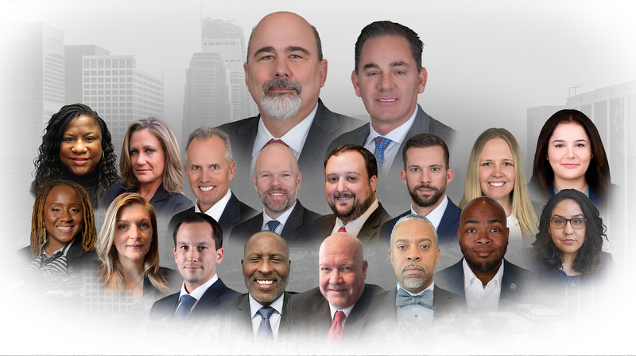
Our firm is led by Stephen Hamilton, who holds board certification in criminal law from the Texas Board of Legal Specialization, a distinction earned by only a small percentage of Texas attorneys. With 27 years of criminal defense experience, Mr. Hamilton has built a team that combines legal expertise with scientific knowledge to challenge every aspect of the prosecution’s case.

We have invested significantly in the tools necessary to defend our clients effectively. Our firm employs an in-house forensic toxicologist who analyzes blood test data in every DWI case. We take a data-driven approach, obtaining all police reports and videos and transcribing everything to build the strongest possible defense. These resources allow us to identify flaws in testing procedures that other attorneys might overlook.
With 11 offices across Texas and round-the-clock availability, we remain accessible whenever you need guidance.
Schedule Your Free Consultation →
Frequently Asked Questions (FAQs)
What makes CDL DWI cases different from regular DWI cases in Texas?
CDL holders face a stricter BAC threshold of 0.04% (half the 0.08% limit for regular drivers), mandatory federal disqualification periods that Texas courts cannot waive, and the inability to obtain occupational licenses for commercial driving.
Additionally, violations in personal vehicles carry the same CDL consequences as those in commercial vehicles, and second offenses result in lifetime bans from commercial driving.
Can negotiating for reduced charges help save my CDL?
In some cases, yes. Reducing DWI charges to non-DWI offenses, such as obstruction of a highway or reckless driving, may help avoid federal CDL disqualification.
However, these negotiations depend on case-specific factors, such as borderline BAC levels, a clean driving history, or evidentiary problems with the prosecution’s case. This strategy requires attorneys who understand both DWI defense and federal CDL regulations.
What happens if I win my ALR hearing but lose my criminal case?
Winning the Administrative License Revocation hearing preserves your driving privileges while the criminal case proceeds, but a subsequent DWI conviction will still trigger federal CDL disqualifications.
The ALR hearing and criminal case are separate proceedings with different standards of proof, so success in one doesn’t guarantee success in the other.
How can Texas Criminal Defense Group help with my CDL DWI case?
Founded by Stephen Hamilton, a board-certified criminal law specialist with 27 years of experience, Texas Criminal Defense Group combines legal expertise with advanced scientific resources, including in-house forensic toxicology capabilities and proprietary breath-testing equipment.
With over 11,500 cases handled and a transparent pricing structure, we provide commercial drivers across Texas with the comprehensive defense their careers demand.
*Disclaimer: This article is provided for informational purposes only and does not constitute legal advice. Reading this content does not create an attorney-client relationship. For advice regarding your specific situation, please contact Texas Criminal Defense Group.